- Rethink Resistance Training
- Posts
- Is maximal strength a key factor in living longer?
Is maximal strength a key factor in living longer?
Rethink Resistance Training

Daryl Richards
September 07, 2025

It's a commonly held view that training for maximal strength is more a young persons game.
The urge is certainly greater in our youth to test ourselves, and see how heavy we can lift in exercises like the bench press and deadlift.
Then once we hit a certain age it’s better to "play it safe", train a bit lighter, train more for health and reduce injury risk.
Nothing inherently wrong with that mindset at all, especially when you've had injuries in the past (as I certainly have).
If you have any old injury issues or current joint pains, then lifting heavier is not the first thing that comes to mind….
We also another narrative around lifting "heavy weights" that maybe its more for athletes, olympic weight lifters, strongman competitors and power lifters.
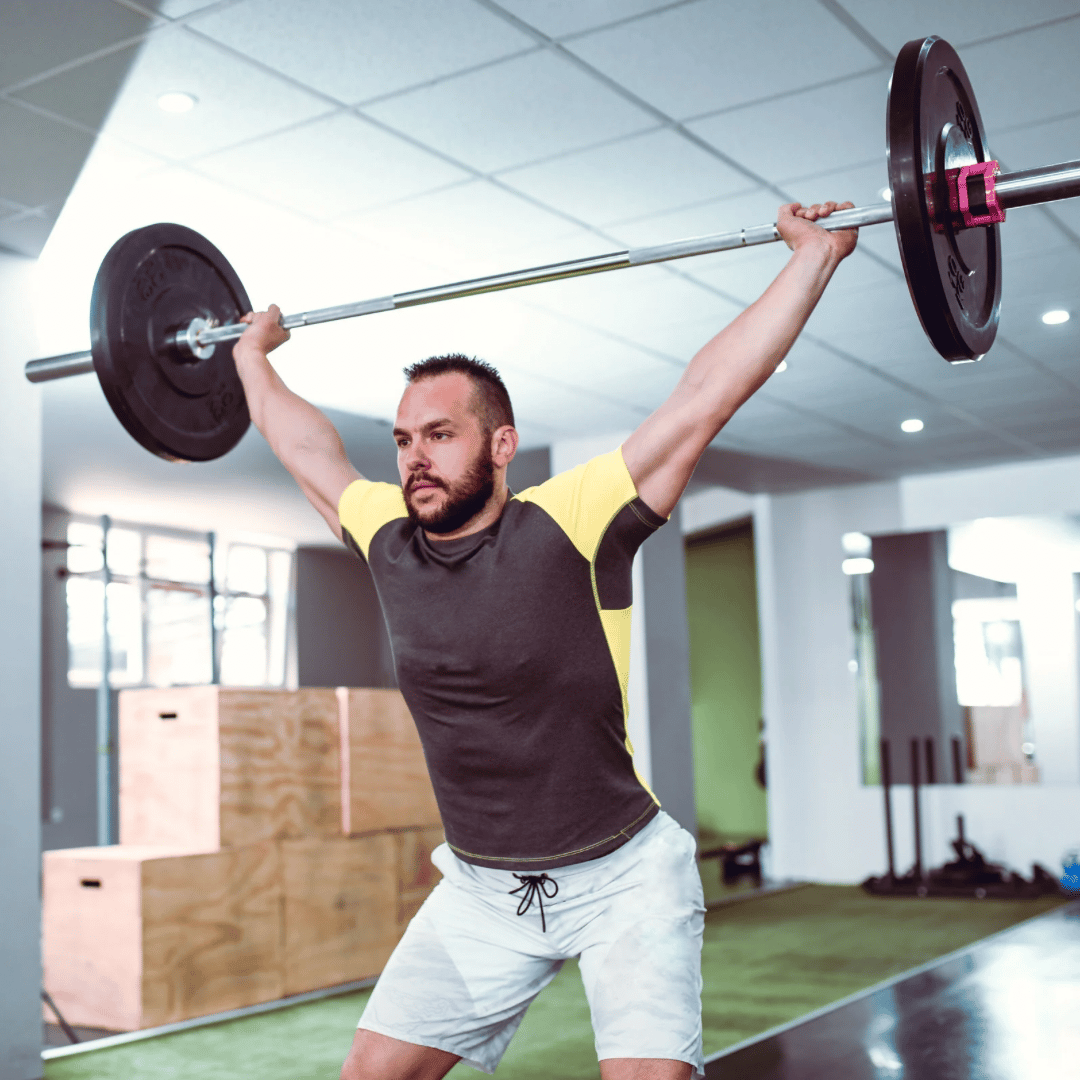
Perhaps this is why some people fear lifting heavier because they think it requires challenging themselves with heavy barbells, dumbbells and free weights.
So are we looking at training for strength in the wrong light?
Or is it more about how it’s been portrayed and perceived over the years?
It appears the top 3 training goals for people aged between 40-60 are:
Maintain muscle mass/prevent bone loss
Maintain function and quality of life
Manage and prevent chronic diseases
Maintaining maximal strength levels is not first on the list as we see, however it can actually assist all of these.
Despite the narrative that older people are "too frail" to challenge themselves with heavier resistance, there's no real evidence to support this.
An excellent study from this year highlighted that a lack of physical strength predicts future mobility limitations, increased risk of falls and fractures as well as reduced physical performance.

Also the stronger we are in older age there's strong evidence to support reduced risk of all cause mortality as well as mortality from cancer.
Now a valid argument against lifting heavy is that we can still get stronger, healthier and certainly build and maintain muscle using lighter weights for more reps.
While there's some truth to this, it's the ability to produce force quickly (aka "rate of force development") that heavier resistance training builds.
This is coupled by the maintenance of fast twitch muscle fibres that naturally decline with age, IF we don't train to maintain them.
The advantages this offers to the older population is a huge reduction in risk of falls, ability to get up out of chairs, climb stairs and better overall power and performance.
We could safely say that higher strength levels correlates to more independence.
And if you are keen to stay active or involved in sports as long as possible, then it’s clear that heavier resistance training is going to help.
Just for context and to make it clear, heavy resistance training for strength building requires loads approximately 85%+ of your 1RM.
Understandably many people don't know their maximum weight on many exercises, so simply using a weight that is challenging for around 5 reps is perfectly fine too.
Now that we know there are excellent reasons for improving max strength in order to age better, how can we incorporate heavier resistance training safely?
You don’t have to train like a powerlifter…
Firstly we have to change the narrative that lifting heavy requires certain exercises like barbell squats, deadlifts and bench pressing to train for strength.
Whilst multi joint (compound) exercises are more effective due to the ability to use more resistance safely. The same rules apply that you use the exercise variations that are safest and most suitable for you.

This can mean machines like the seated leg press, seated chest press, chest supported row machines, lat pull downs and so on.
The most important thing is the resistance you use to get the required adaptations, NOT necessarily the particular exercises you use.
You don’t have to train to failure…
Unlike training for hypertrophy and muscle gain, training for strength doesn't require you to go to failure in order to make progress.
A 2024 study showed that you can leave 2 reps in reserve when training for max strength, and there's no significant difference in progress than if you were to train to failure.
This is good news for both safety and any "fear" aspects of lifting a little heavier, as there's much less risk involved when leaving 2 reps in reserve.

Another positive aspect of training for strength is that it will not burn you out like higher volume and higher rep resistance training can.
The demand on the nervous system can be higher, but this can be managed by using a low training volume and optimising recovery.
What a simple program looks like…
As mentioned previously, to maximise getting stronger you need to use a resistance that is going to be challenging for 5-6 reps (or approx 85%+ of your 1RM).
Here's a simple outline of how a program might look:
2 sessions per week with 2-3 days rest between sessions.
2-4 exercises.
Use mainly multi joint exercises.
Full body sessions emphasising the lower body as strength loss is often greater in the lower extremities.
5-6 reps per work set (ensure you use at least 2 warm up sets).
2-3 work sets per exercise.
2-4 mins rest between sets.
Leave 2 reps in reserve on work sets.
As always, opt for good form, control and execution of every rep and make sure you are dialled in and mentally switched on.
Use a slower and controlled rep tempo as you lower the resistance down, and can use a CONTROLLED acceleration as you lift the resistance.
Don’t bounce out of the bottom and throw the weight up either. Accelerate yes, but with control.
Lastly always use a weight you have full control of - I cannot stress this enough.
To wrap up…
So now we know that maintaining, gaining or regaining maximal strength as we get older has some potent benefits for our longevity.
It’s also not inherently unsafe provided it’s controlled, well structured, supervised as needed and proper care is taken when you train.
While there’s been evidence to suggest that one year of heavy resistance training in older adults resulted in strength gains lasting up to 4 years.
That is not a recommendation that you must train like this for a year.
This is merely to highlight potential longterm benefits on your maximum strength levels.
Realistically a 3-4 week phase of heavier resistance training twice per year might be all you need in your ongoing training program.
You certainly don’t have to train heavy all the time, nor would I necessarily advise it.
IMPORTANT:
The information in this newsletter is of a general nature only and not to be taken as personal advice.
Resistance training always carries a potential risk so seek appropriate advice and guidance to ensure your health and injury status deem it appropriate before starting.
If you have health issues, are inexperienced and/or detrained then a full assessment and proper supervision from a well qualified coach when training is recommended.
Bloch-Ibenfeldt M, Theil Gates A, Karlog K, et al. Heavy resistance training at retirement age induces 4-year lasting beneficial effects in muscle strength: a long-term follow-up of an RCT. BMJ Open Sport & Exercise Medicine 2024;10:e001899. doi: 10.1136/bmjsem-2024-001899
Robinson, Z.P., Pelland, J.C., Remmert, J.F. et al. Exploring the Dose–Response Relationship Between Estimated Resistance Training Proximity to Failure, Strength Gain, and Muscle Hypertrophy: A Series of Meta-Regressions. Sports Med 54, 2209–2231 (2024). https://doi.org/10.1007/s40279-024-02069-2
Tøien, T., Berg, O., Modena, R., Brobakken, M. and Wang, E. (2025), Heavy Strength Training in Older Adults: Implications for Health, Disease and Physical Performance. Journal of Cachexia, Sarcopenia and Muscle, 16: e13804, https://doi.org/10.1002/jcsm.13804.
